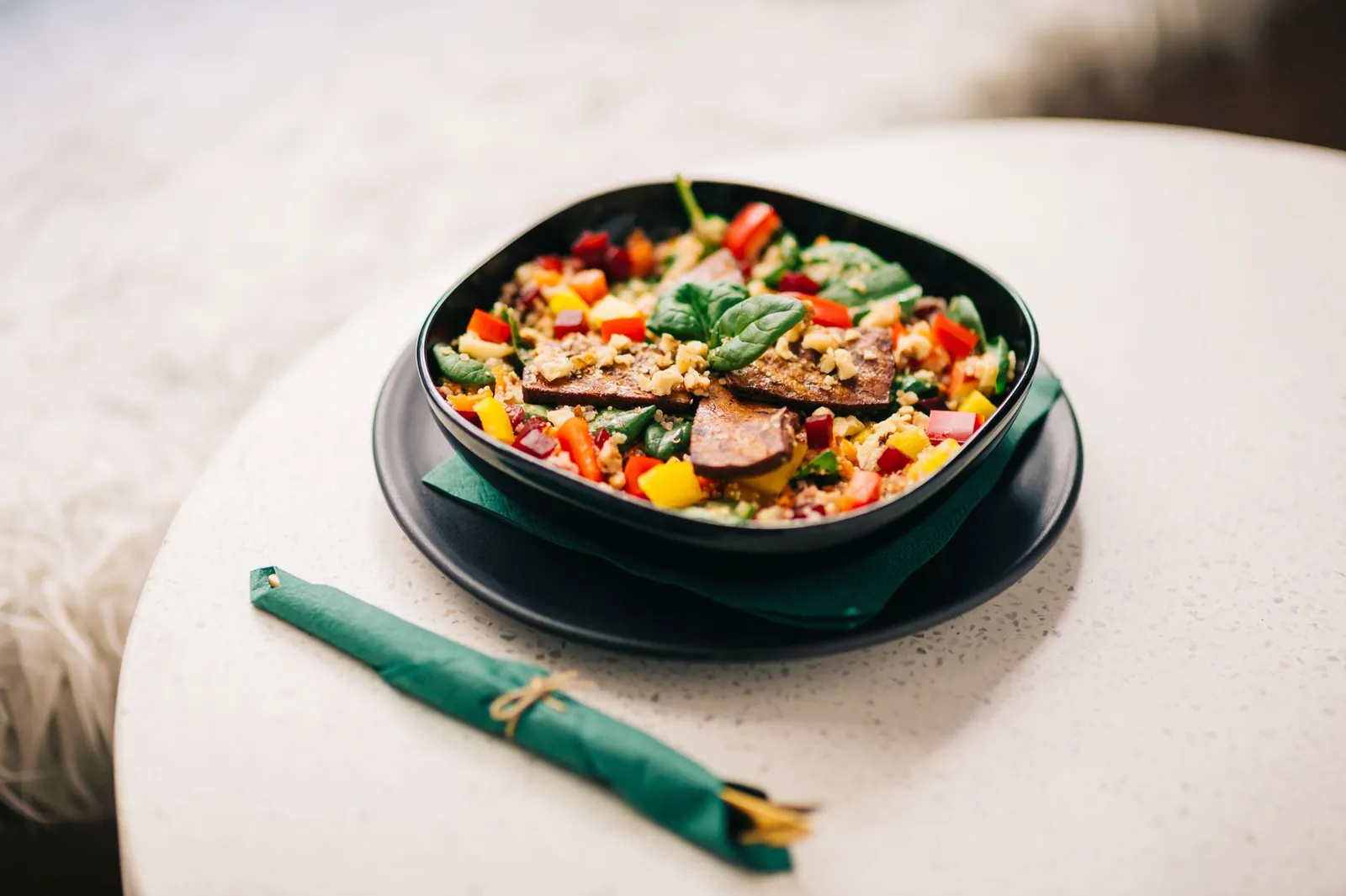
A single grain makes a perfectly good base. But two or three grains together make a more interesting one, and that is the quiet secret behind the best grain bowls. A bowl built on one grain can taste a little monotonous by the last few spoonfuls — every mouthful the same size, the same chew, the same note. Combine a creamy grain with a chewy one, or a fluffy grain with a firm one, and each spoonful has more going on: a mix of textures, a broader flavour, and a base that stays interesting all the way down. Restaurants have known this for years, which is why their grain bowls so often list two or three grains rather than one. At home it is just as easy, and once you have a batch or two of cooked grains in the fridge it costs no extra effort at all. This is how to combine grains well, and how to build a bowl around them so the whole thing tastes balanced rather than like a random pile of leftovers.
Mixing for texture
The most reliable way to combine grains is to think in terms of contrast. Pair a chewy, distinct grain with a softer, creamier one and the two play off each other: the chewy grain gives structure and bite, the soft grain fills the gaps and binds the bowl together. Sorghum with a little amaranth, farro with millet, barley with a spoonful of something creamy — each of these gives a more satisfying mouthful than either grain alone. You do not need equal amounts; often a sturdy grain as the main event with a smaller measure of a softer one folded through is the happiest ratio.
Colour and size add interest too. Dark, tiny teff or green-flecked freekeh scattered through pale sorghum simply looks more appetising than a uniform bowl, and the eye is part of how a bowl tastes.
Cook separately, combine after
Because different grains cook at different speeds, the simplest approach is to cook each one on its own and mix them once they are done. Trying to cook a fast grain and a slow one in the same pot leaves one mushy and the other hard. If you batch-cook a few grains over the week, you will often have two or three already waiting in the fridge, and combining a scoop of each is a matter of seconds. Dress the mixture while at least one grain is still warm so it soaks up the flavour.
Building the whole bowl
The grains are the foundation; a good bowl needs a few more layers on top. Think of it in parts: the grain base, something roasted or cooked for warmth and substance, something raw and fresh for crunch and colour, a protein or a rich element if you want it, and a dressing to pull it all together. You do not need all of these every time, but a bowl with three or four of them tastes considered rather than thrown together. A pile of roasted vegetables, a handful of fresh herbs and leaves, a spoon of yoghurt or a soft egg, and a bright dressing over a two-grain base is a complete, satisfying meal.
The dressing does the work
More than anything, a good dressing is what turns mixed grains and toppings into a bowl that tastes whole. Grains are mild, so they want assertiveness: acid from lemon or vinegar, salt, a little fat, and something with character — mustard, garlic, herbs, a spoon of tahini. Dress the grains first, on their own, so they are seasoned right through before the toppings go on; a bland grain base drags the whole bowl down no matter how good the rest is. Toss, taste, and adjust the acid and salt until the plain grains taste good enough to eat by themselves.
Do that, and the rest falls into place. A couple of cooked grains from the fridge, combined for texture, dressed with a sharp hand, and topped with whatever is fresh and whatever is roasted — that is a bowl you can build a hundred ways from the same handful of habits, and never eat the same one twice.