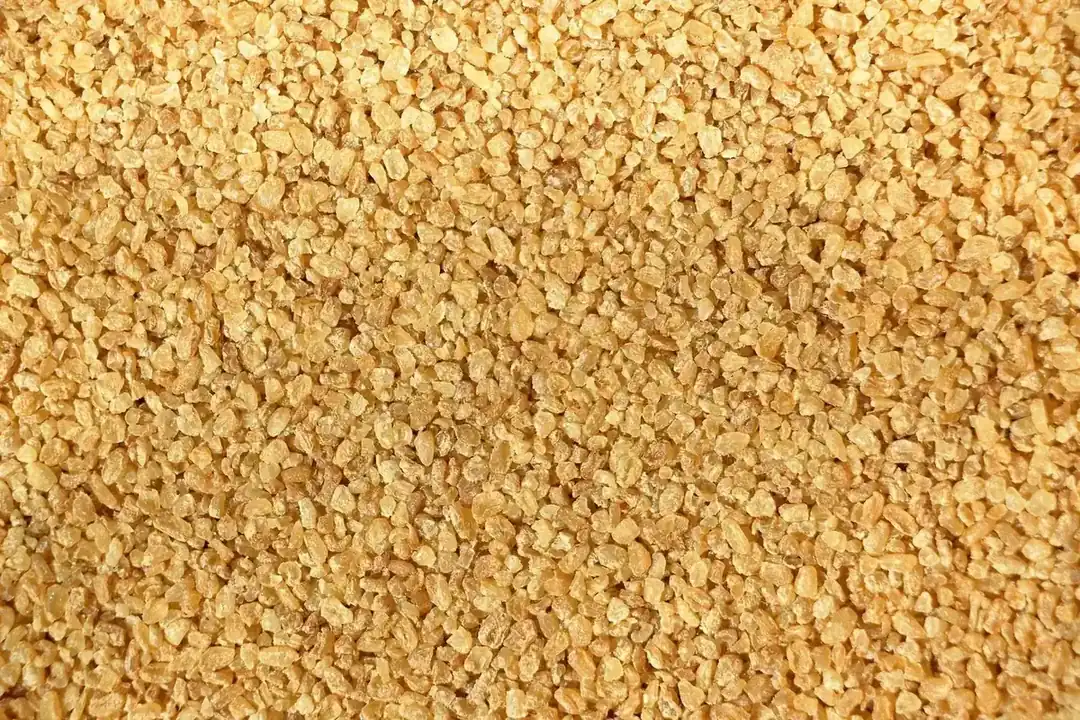
Most grains taste of themselves and little else — a clean, nutty, faintly sweet background note that you dress up with whatever you cook alongside them. Freekeh is the exception, the one grain on the shelf that arrives already carrying a flavour of its own. Open a bag and you catch it straight away: a green, grassy, faintly smoky smell, like the memory of a bonfire in an open field. That smoke is not an additive or a marketing flourish. It is baked into what freekeh is and how it is made, and it is the entire reason to keep the grain. Freekeh is young wheat, harvested while the kernels are still green and soft, then set alight so the straw and chaff burn off while the moist grains inside merely roast. What you buy is the roasted result — sometimes whole, sometimes cracked — olive-green and smelling of the fire that made it. Understanding that origin is the key to cooking it well.
Where the smoke comes from
The name freekeh comes from an Arabic word for the rubbing that separates the grain after roasting. Farmers cut the wheat young, pile it, and burn the stalks; because the green grains still hold moisture, they steam and toast rather than catching fire themselves. Then the charred husks are rubbed away, leaving kernels that have taken on a gentle smokiness right through. That is why no amount of rinsing washes it out — the flavour is in the grain, not on it.
This also explains freekeh's colour and its slightly chewy, almost meaty character. Harvested young, it keeps a green tint and a firmer structure than fully ripened wheat, which is part of why it holds up so well in cooking.
Cracked versus whole
Freekeh comes two ways, and they cook quite differently. Cracked freekeh is broken into smaller pieces and cooks fairly quickly — around twenty minutes in simmering water or stock — into a soft, savoury pilaf, a bit like a smoky bulgur. It is the easier of the two and the better place to start. Whole freekeh keeps its full kernels, needs longer, perhaps forty minutes, and stays chewier, making a sturdier base with more bite.
A simple method
Treat freekeh like a pilaf. Warm a little oil or butter in a pot, add the grain, and stir for a minute so it coats and toasts lightly — this builds on the roasted flavour already there. Pour in about two and a half parts liquid to one part cracked freekeh, or a little more for whole, season with salt, bring to a simmer, then cover and cook low until the liquid is absorbed and the grain is tender. Let it rest off the heat for a few minutes, then fluff with a fork.
Buying and storing it
Freekeh is not always easy to spot, and it hides under a few spellings — freekeh, frik, farik — so it is worth learning to recognise the grain itself. Look for that distinctive olive-green colour and the roasted, hay-like smell; a good bag has a clear smokiness even before you cook it. Decide up front whether you want cracked or whole, since the two cook so differently, and buy cracked if you are new to it. Stored like any whole grain — sealed, cool and out of the light — it keeps for months, and the smoky aroma holds well as long as the jar stays shut. If a bag smells flat and dusty rather than roasted, it has been sitting a long time and will make a duller pilaf.
Where the flavour shines
Freekeh's smoke pairs naturally with warm, sunny flavours. It is wonderful with roasted vegetables, especially anything charred, and it loves the company of herbs — parsley, mint, coriander — stirred through at the end with a squeeze of lemon. A freekeh pilaf studded with toasted nuts, soft herbs and a little dried fruit is a dish in its own right. It also makes a fine bed for grilled or roasted things, where its own smokiness echoes what came off the fire.
Because that flavour is so distinctive, freekeh is a grain to let lead rather than to bury. Keep the seasonings bright and simple and let the smoke do the talking. Cooked with a little care and dressed with acid and green herbs, it turns a plain weeknight base into something that tastes like it took far more effort than it did — which, once you know its trick, is the quiet pleasure of the grain.